
Fairy meadow and Nanga Perbat
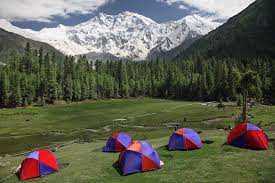
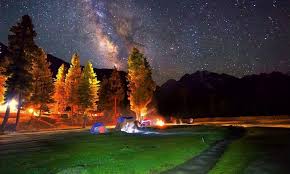
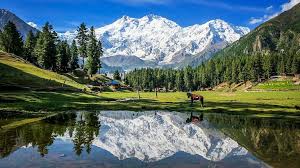
Imagine a place where pine-scented breezes meet snow-kissed mountain giants, where nights are spent under a blanket of stars, and mornings greet you with the majestic face of Nanga Parbat, the 9th highest peak in the world. Welcome to Fairy Meadows — a name that sounds like a dream, but feels even more magical when you’re standing there.
This enchanting alpine meadow, nestled at 3,300 meters above sea level, is a gateway to Nanga Parbat Base Camp, offering breathtaking views that are simply unforgettable. The journey itself is an adventure — a thrilling jeep ride on one of the world’s most daring mountain tracks, followed by a scenic trek through lush forests and flower-filled paths.
camping
hiking
It starts quietly — the soft zip of your jacket, the cool breath of dawn on your face, and a mountain trail winding ahead like a story you’ve just begun to read.
In Hunza, hiking isn’t about conquering peaks. It’s about letting go. With every step, you leave behind the weight of the world — the noise, the rush, the endless scroll. Out here, it’s just you, the earth beneath your boots, and a sky so wide it makes your heart ache a little.
The path winds through old apricot trees, across wooden bridges that creak with memory, and into valleys so still you can hear your thoughts settle. Locals pass by with a nod or a warm “hello,” reminding you that you’re a guest in their paradise. The wind carries the scent of pine and stone. The sun peeks over Ultar Sar like it’s smiling just for you.
You climb. You breathe. You pause — not because you’re tired, but because the view steals your words. A glacial stream. A prayer flag fluttering. A silence that heals.
Jungle Safari
A is an overland journey, usually a trip by tourists to Africa. In the past, the trip was often a big-game hunt, but today, safari often refers to trips to observe and photograph wildlife—or hiking and sightseeing, as well.
The Swahili word safari means journey, originally from the Arabic meaning a journey; the verb for “to travel” in Swahili is kusafiri. These words are used for any type of journey, e.g. by bus from Nairobi to Mombasa or by ferry from Dar es Salaam to Unguja. Safari entered the English language at the end of the 1850s thanks to Richard Francis Burton, the famous explorer.
The Regimental March of the King’s African Rifles was ‘Funga Safari’, literally ‘tie up the March’, or, in other words, pack up equipment ready to march.
In 1836 William Cornwallis Harris led an expedition purely to observe and record wildlife and landscapes by the expedition’s members. Harris established the safari style of journey, starting with a not too strenuous rising at first light, an energetic day walking, an afternoon rest then concluding with a formal dinner and telling stories in the evening over drinks and tobacco.
Peak Climbing
A climbing peak may refer to a mountain or hill peak or a rock formation that has to be ascended by climbing. The term is common in Germany where it is specifically used of free-standing rock formations in the climbing regions of Saxon Switzerland, Zittau Mountains and other nearby ranges in the German Central Uplands that can only be summitted via climbing routes of at least grade I on the UIAA scale or by jumping from nearby rocks or massifs. As a general rule, they must have a topographic prominence of at least 10 metres to qualify. In Saxon Switzerland the Saxon Climbing Regulations do not require any minimum height, but define climbing peaks as
Another requirement is its recognition by the responsible sub-committee of the Saxon Climbers’ Federation (SBB) and the responsible conservation authorities. For hikers these authorized summits may often be recognised by the presence of a summit register and abseiling anchor points.
In other climbing areas, such as those in Bohemian Switzerland, there are other exceptions. There, climbing peaks only need to have a significant rock face – the lowest side of which has to be less than 10 m high, but at least 6 m high.